PETRUS
A story about depopulation, ancient trades that are on the way out, and the confused line that separates art from craftsmanship
Petrus is a multidisciplinary project in which cinema, audiovisual arts and heritage converge as a vehicle for the dissemination of local art in the valleys of Izagaondoa, Ibargoiti, Valdorba, Unciti, Ezcabarte and Aezkoa. A cultural initiative that addresses the lines of union between Romanesque art and creative stonework of the 21st century, as well as the divergence between the museum’s creative process and the luxurious artistic business.
In addition, PETRUS has a deep social perspective, focusing on the depopulation of rural areas and comes to propose creative solutions in the form of cultural alternatives for local development.
The project starts from the initial idea of making a documentary feature film that is in the development phase. However, the project has grown in order to make its cultural contribution to the valley and create local collaborative spaces.
In this sense, the project has added a 23-minute documentary short film that has been screened this summer in various locations that make up the rural Romanesque route of the Petrus school. Furthermore, in September, a multimedia installation was created showing the process of artistic creation of the museum’s reproductions.
PROTAGONISTS
Surrounded by mountain tracks and typical Basque farmhouses (caseríos), Joseba Lekuona seeks an equilibrium in stone through his work, to which he has dedicated more than 20 years. After his time in the Stonework School in Pamplona, Joseba has done a bit of everything in his desire to continue earning a living from artisanal stonecutting rather than following other, more ‘industrial’, like almost all his contemporaries who work in this field. Joseba does not really know why he continues to be a stonecutter, but he thinks of the wide variety that exists between different types of stone and their surprising resemblance to human diversity: “harrobi bere batetik ateratzen diren harriak guztiz arras desberdinak izan daitezkeela, eta guk harriekin eta pertsonekin dauzkagun harremanak neurri batean neur daitezke termino berdinekin, harri batzuekin sentitzen dugun disdira eta beste harriekin nazka. Batzuetan gogorrenak direnak xamurragoak dira lan egiteko, oso bigunak direnak baino. Orduan, horrek ere asko erakusten zuen”. Sometimes believes that the stones chose him. In this continuous questioning of his own motives, the similarities between human beings (made of water and matter) and stone (pure matter).
Joseba does not have much time to exchange impressions or receive visits, with the exception of the odd eccentric client who wants to observe how he works on site; this serves as inspiration for the “creative stoneworker”, as he calls himself on his website. He has been experimenting and researching with stone for years, but would never have imagined that his philosophy on the gastronomic experience of eating in marble tableware could achieve such international projection and fame. This has allowed him to enjoy a more relaxed lifestyle and work on the pieces that he really likes, although he sometimes misses the challenges he used to face in the past when he did not have a lot to lose.
Simeón Hidalgo, a retired schoolteacher, determined to develop his ‘Petrus’ museum project, a museum on the mediaeval stonemason Petrus de Gerguitiain, in the Izagaondoa valley. A scholar of Petrus since 2010, Simeón contacted Joseba Lekuona to see if he could help him with the cutting of some reproductions of Petrus’ work, sculptures on display in his museum in the small village of Lizarraga de Izagaondoa. Now, 10 years after this peculiar relationship began, Simeón calls Joseba again to create new pieces by the mediaeval artist. We follow this process of working with stone over a few months, with new reproductions and the re-encounter with the mediaeval master Petrus, one between a stonemason from the past and another from the present, as a kind of “road movie” inside Joseba’s head and his relationship with art, while we take a real journey through the route of the Romanesque art of Petrus, now invisible art on a route through a rural world that is slowly disappearing.
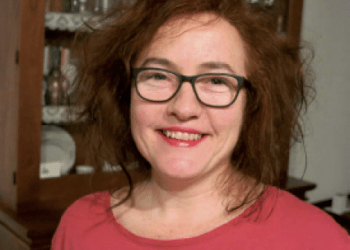 Director
HELENA BENGOETXEA
+Director
HELENA BENGOETXEA
A filmmaker, editorial designer, teacher and journalist, with a Master’s degree in Feminism Studies (Universidad de Barcelona-DUODA) and a Master’s in Audiovisual Communication (EHE-UPV and EiTB). She studied creative documentary filmmaking in the EICTV in San Antonio de los Baños (Cuba) and completed her audiovisual training in a number of reference seminars with Robert McKee, Mercedes Álvarez, Carmen Guarini, Nicolas Philibert, Pedro Costa or Patricio Guzmán, to mention a few. She has created audiovisual projects with several groups and social entities on themes such as feminism, historical memory and development cooperation/education, among others. She has worked on a range of transmedia projects and new audiovisual narratives at Centre La Bonne in Barcelona since 2005, where she currently participates in the LAB-FEM audiovisual laboratory, coordinated by Lola Mayo.
 Production
MARÍA GUZMÁN LIGORIT
+ Production
MARÍA GUZMÁN LIGORIT
A graduate in Humanities from the Universidad de Navarra with a specialisation in Cultural Management and a Master’s degree in Cultural Management: Music, Theatre and Dance from the Universidad Complutense (Madrid). She has worked as a production and art direction assistant in short films and several videoclips, and as a cultural manager for public institutions and bodies. She has also worked as a producer in reference events such as the Seminci (Valladolid Film Festival), the San Sebastian International Film Festival (SSIFF), the Edinburgh International Film Festival and the Punto de Vista documentary film festival. She is currently the production manager of the documentary “Drogas. El documental”, by Natxo Leuza..
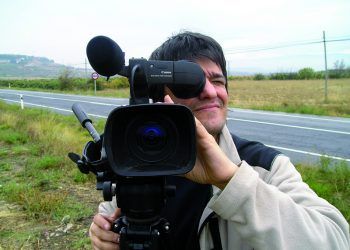 Director of Photography
RUBÉN MARCILLA LÓPEZ DE DICASTILLO
+Director of Photography
RUBÉN MARCILLA LÓPEZ DE DICASTILLO
Audiovisual director and producer with extensive experience, carrying out a range of documentaries on different themes such as historical memory, social economy, ethnography and intangible heritage, ecology or anti-militarism, among others. Heading HARURU FILMAK since the beginning, he specialises in streaming video, as well as the live production of concerts and other audiovisual events for different public institutions and bodies. Has actively participated in local radio stations and audiovisual communication groups since the mid-1980s, and also produces and authors a series of collective projects and provides audiovisual consultancy for social and community movements.
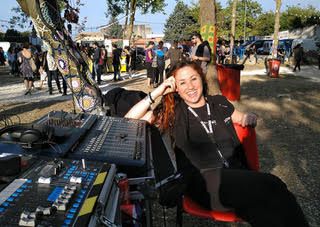 Direct sound
KRISTINA ESTEBAN BLANCO
+Direct sound
KRISTINA ESTEBAN BLANCO
Sound technician and gaffer. Superior Technician of Plastic Arts and Design in Photography. He has also studied Arts Applied to Sculpture (Valladolid School of Arts) and Graphic and Interior Design (Plato Valladolid School). With extensive professional experience in live shows and music festivals, TV production and sound and lighting of cultural events for Baluarte, Parliament of Navarra or BEC, among others, in performing arts, classical music concerts or opera performances.
 Original soundtrack
IÑIGO PÉREZ ARTIEDA
+Original soundtrack
IÑIGO PÉREZ ARTIEDA
Music producer, composer, arranger, sound technician, lyricist, and performer. With wide-ranging experience in musical production, he has also produced pieces for “Conecta Fiction” and put the music to the promotional videos for NAPAR. Creator of Lúnula studios, where he/she works with other musicians and artists of international renown.
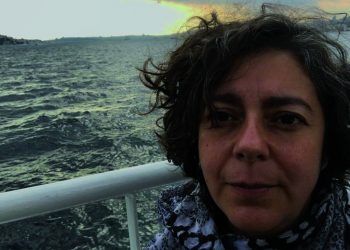
Editor
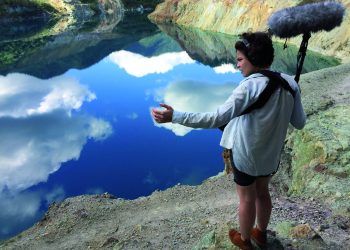
MARÍA CALLE GUERRERO
She has worked as editor, screenwriter and consultant in audiovisual media, documentary projects, fiction films, video art and advertising for the last 14 years. She studied Literature and Filmmaking and has taken part in the following workshops: Screenwriting in ECAM, a Documentary Seminar with Patricio Guzmán, a screenwriting workshop in the School of Journalism of the EL PAÍS newspaper, and the workshop titled “How to appreciate a cinematographic work: analysis and writing”, in the Aula Virtual de Taller Multinacional. Has contributed to the magazine “Arte al día México”, researching and writing specialized articles on art and video, Mexico (2007-2011). Curator of the Di@metro, Galería de videoarte project in the Mexico City subway (2006-2008). Founder of the “Videopopuli” group, with whom she produced four video art and electronic art festivals in Colombia, Mexico and Germany.
 Sound design and post-production
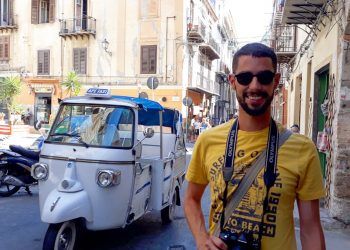
DANIELA FUNG MACCHI
+Sound design and post-production
DANIELA FUNG MACCHI
Audiovisual production technician (recording, editing and mixing music in the studio, post-production of audiovisual pieces) in the Taller de Arte Sonoro (Caracas, Venezuela) and a graduate from the EICTV in San Antonio de los Baños (Cuba) in the speciality of Sound. She has worked as an assistant to sound recordists like Mario Nazoa and Eduardo “Chubby” Lopera, as stage manager and sound mixing assistant for recordings of musical groups belonging to the Sistema de Orquestas y Coros de Venezuela and as a recording assistant for the production of discs and live operas for Fundamusical Bolívar (El Sistema) in Caracas.
 Dircom
OROITZ ZABALA CIA
+ Dircom
OROITZ ZABALA CIA
Degree in Journalism at the University of the Basque Country and Master in Corporate Communication, protocol and events at the Open University of Catalonia. He has worked for more than 10 years in corporate and institutional communication, has collaborated in media such as Nabarreria.com, Eguzki Irratia or Ahotsa.info and has participated in the communication work of different popular movements.
TECHNICAL INFORMATION
- Script & Direction: Helena Bengoetxea
- Director of Photography: Rubén Marcilla
- Direct sound: Kristina Esteban Blanco
- Music Compose: Iñigo Pérez Artieda
- Editor: María Calle Guerrero
- Sound Designer: Daniel Fung Macchi
- Executive Producer: María Guzmán Ligorit / Haruru Filmak
- non-fiction feature film / 80’ (52’ versión TV) / color 4K
- Original language: Basque, Spanish
LATEST SCREENINGS OF THE SHORT FILM
22/02/11
|
Friday 19:00
Larraintzar – Ultzama
Do you want us to screen the short film in your town?
Contact us!
21/10/20
|
Wednesday 20:00
Zaldiko Maldiko – Pamplona
21/8/19
|
Thusday 20:00
Lizoain
21/8/17
|
Tuesday 20:00
Ardanaz
21/8/12
|
Thursday 20:00
Urroz
21/8/10
|
Tuesday 20:00
Monreal
21/8/7
|
Saturday 19:00
Iglesia de Guerguitiáin